
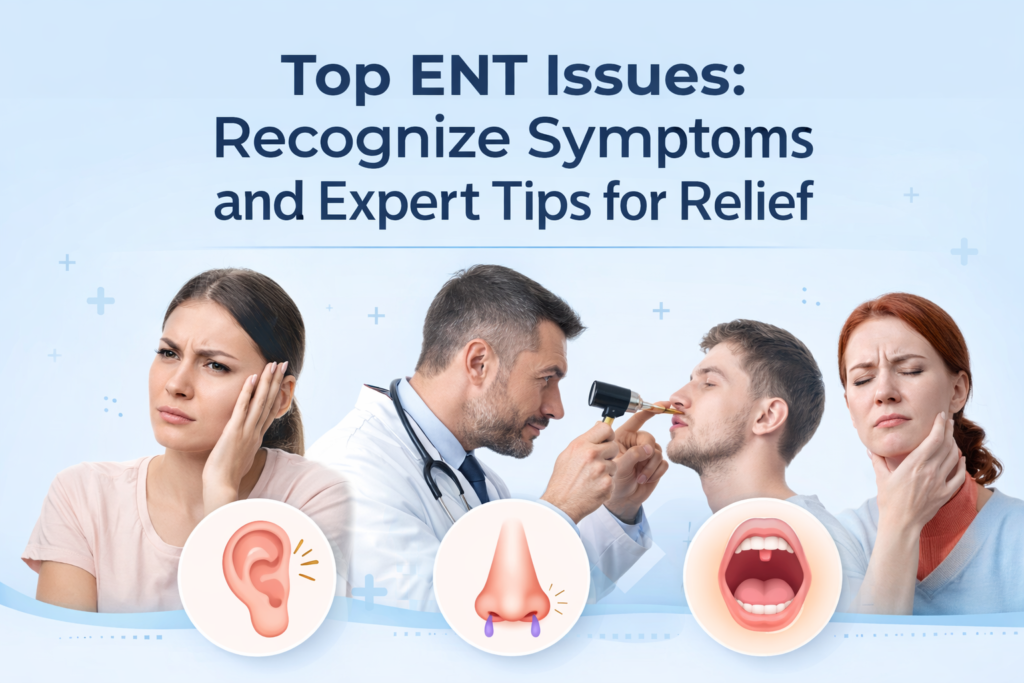
Top ENT Issues: Recognize Symptoms and Expert Tips for Relief
Ear, nose, and throat (ENT) issues are common across all age groups, affecting individuals regardless of their lifestyle, age, or geographic location. ENT disorders encompass a wide range of conditions, including infections, allergies, hearing problems, and more serious diseases that affect our ability to breathe, speak, or hear. It’s essential to understand the symptoms of these issues, along with some expert tips for effective relief. In this blog, we’ll explore the top ENT issues, their symptoms, and proven solutions for effective treatment ENT Issues
1. Ear Infections ENT Issues
Symptoms:
Earache or pain in the ear
Fluid draining from the ear
Hearing loss or muffled hearing
Tinnitus (ringing or buzzing in the ears)
Irritability or difficulty sleeping (in children)
Expert Tips for Relief:
Ear infections are common, particularly in children, and can be caused by bacteria, viruses, or fungi. The most common types of ear infections are:
Otitis Media (Middle Ear Infection): This is usually caused by an upper respiratory infection that spreads to the ear.
Otitis Externa (Outer Ear Infection): Also known as swimmer’s ear, this infection affects the ear canal.
Labyrinthitis (Inner Ear Infection): This affects the balance organs of the ear and can cause dizziness, nausea, and hearing loss.
Treatment:
Warm Compress: Applying a warm compress over the infected ear can help reduce pain and discomfort.
Over-the-Counter Pain Relievers: Non-prescription medications such as ibuprofen or acetaminophen can alleviate pain.
Antibiotics: If the infection is bacterial, a doctor may prescribe antibiotics.
Ear Drops: For outer ear infections, medicated ear drops can help clear up the infection.
Avoiding Water: If you have swimmer’s ear, keeping the ear dry is essential. Avoid water activities until the infection clears.
2. Sinusitis ENT Issues
Symptoms:
Nasal congestion or blocked nose
Thick yellow or green mucus discharge
Facial pain or pressure around the eyes, forehead, or cheeks
Headache
Reduced sense of smell
Cough, especially at night
Expert Tips for Relief: ENT Issues
Sinusitis is the inflammation of the sinuses, which are the air-filled spaces around the nose. It can be triggered by an infection, allergies, or other factors like pollution or irritants.
Treatment:ENT Issues
Hydration: Drinking plenty of water helps thin mucus, making it easier to drain from the sinuses.
Saline Nasal Spray: These sprays can help rinse out mucus and allergens from the nasal passages.
Steam Inhalation: Inhaling steam from a bowl of hot water or during a shower can help loosen mucus.
Warm Compress: Applying a warm compress to the face can relieve sinus pressure and pain.
Decongestants: Over-the-counter decongestants can help relieve nasal congestion, but they should not be used for more than a few days.
3. Allergic Rhinitis (Hay Fever)ENT Issues
Symptoms:
Sneezing
Itchy, runny, or stuffy nose
Watery eyes
Itchy throat or ears
Coughing or wheezing
Expert Tips for Relief:
Allergic rhinitis occurs when the immune system overreacts to allergens such as pollen, mold, dust mites, or pet dander. This results in inflammation of the nasal passages, leading to symptoms like sneezing, a runny nose, and itchy eyes.ENT Issues
Treatment:
Antihistamines: These medications block the action of histamine, a substance that triggers allergy symptoms.
Nasal Steroid Sprays: These sprays reduce inflammation in the nasal passages and are effective for long-term allergy management.
Avoidance of Allergens: Reducing exposure to known allergens is essential. Consider keeping windows closed during high pollen seasons, using air purifiers, and washing your hands and face after coming into contact with allergens.
Allergy Shots: Immunotherapy, or allergy shots, can help desensitize your immune system to allergens over time.
4. Tonsillitis
Symptoms:
Sore throat
Swollen tonsils
Difficulty swallowing
White or yellow spots on the tonsils
Fever
Bad breath
Expert Tips for Relief:
Tonsillitis is the inflammation of the tonsils, often due to a viral or bacterial infection. It can cause significant discomfort and make swallowing difficult. This condition is most common in children but can affect adults as well.
Treatment:
Antibiotics: If bacterial tonsillitis is diagnosed, a course of antibiotics may be prescribed.
Warm Saltwater Gargle: Gargling with warm saltwater can help soothe a sore throat and reduce inflammation.
Over-the-Counter Pain Relievers: Medications like acetaminophen or ibuprofen can alleviate pain and reduce fever.
Tonsillectomy: In severe or recurrent cases, surgery to remove the tonsils may be recommended.
5. Sleep Apnea
Symptoms:
Snoring loudly
Gasping for air during sleep
Feeling tired or drowsy during the day
Difficulty concentrating
Morning headaches
Irritability
Expert Tips for Relief:
Sleep apnea is a sleep disorder characterized by repeated interruptions in breathing during sleep. The most common form is obstructive sleep apnea, which occurs when the muscles in the throat relax excessively, blocking the airway.
Treatment:
Continuous Positive Airway Pressure (CPAP): A CPAP machine delivers a continuous flow of air through a mask to keep the airways open while you sleep.
Lifestyle Changes: Losing weight, avoiding alcohol before bed, and sleeping on your side can reduce sleep apnea symptoms.
Surgery: In severe cases, surgery may be necessary to remove tissue from the throat or reposition the jaw to open the airway.
Mouthpieces: Dental devices can help reposition the jaw and prevent airway obstruction.
6. Hearing Loss ENT Issues
Symptoms:ENT Issues
Difficulty understanding speech, especially in noisy environments
Muffled or distorted sounds
Frequently asking others to repeat themselves
Ringing in the ears (tinnitus)
Expert Tips for Relief:ENT Issues
Hearing loss can be caused by a variety of factors, including aging, prolonged exposure to loud noises, infections, or trauma to the ear. Early intervention can prevent further damage to hearing.
Treatment:ENT Issues
Hearing Aids: These devices amplify sounds, making it easier for individuals with hearing loss to hear and understand speech.
Cochlear Implants: For individuals with severe hearing loss, cochlear implants can help restore hearing by directly stimulating the auditory nerve.
Ear Protection: Avoiding prolonged exposure to loud noises and using ear protection when necessary can prevent further hearing damage.
Regular Hearing Checkups: Regular visits to an ENT specialist can help detect hearing problems early and prevent further damage.
7. Pharyngitis (Sore Throat)
Symptoms:ENT Issues
Pain or scratchy sensation in the throat
Difficulty swallowing
Swollen lymph nodes in the neck
Red, inflamed tonsils
Fever
Expert Tips for Relief:
Pharyngitis, or a sore throat, is often caused by viral infections like the common cold or influenza, but bacterial infections like strep throat can also cause severe symptoms.
Treatment:
Rest and Hydration: Drinking plenty of fluids and getting rest can help your body recover from a viral infection.
Gargling with Saltwater: This can help soothe the throat and reduce inflammation.
Lozenges and Sprays: Over-the-counter throat lozenges or sprays can provide temporary relief for sore throat pain.
Antibiotics: If the sore throat is caused by a bacterial infection, antibiotics will be prescribed.
8. Laryngitis
Symptoms:ENT Issues
Hoarseness or loss of voice
A scratchy or dry throat
Coughing
Difficulty speaking
Expert Tips for Relief:
Laryngitis is the inflammation of the larynx (voice box) and is often caused by viral infections, excessive voice use, or irritants like smoke. It can result in hoarseness or the loss of the voice altogether.
Treatment:ENT Issues
Voice Rest: Avoid speaking or whispering as much as possible to give the vocal cords time to heal.
Humidifier: Using a humidifier can keep the air moist, which helps soothe an irritated throat.
Warm Liquids: Drinking warm liquids like herbal tea or warm water with honey can help soothe the throat.
Avoid Irritants: Stay away from smoking or secondhand smoke, and try to avoid shouting or whispering.
9. Deviated Septum
Symptoms:ENT Issues
Chronic nasal congestion
Difficulty breathing through one or both nostrils
Frequent sinus infections
Nosebleeds
Expert Tips for Relief:
A deviated septum occurs when the thin wall between the nasal passages is displaced, making it harder to breathe through the nose. While it may be present from birth, trauma to the nose can also cause a deviated septum.
Treatment:
Nasal Decongestants: These can help open up the nasal passages temporarily but should not be used for long periods.
Nasal Steroid Sprays: These can reduce inflammation in the nasal passages, helping to alleviate symptoms.
Surgical Correction (Septoplasty): In severe cases, surgery may be needed to reposition the septum and improve airflow.
Conclusion
ENT issues can disrupt daily life, but recognizing the symptoms early and seeking expert treatment can help you find relief. Whether you are dealing with a simple ear infection, chronic sinusitis, or a more complex condition like sleep apnea, there are effective treatments available. By consulting an ENT specialist, making necessary lifestyle adjustments, and using appropriate remedies, you can manage and even prevent many common ENT conditions. Always consult a healthcare provider for accurate diagnosis and personalized treatment.ENT Issues
Lorem ipsum dolor sit amet, consectetur adipiscing elit. Ut elit tellus, luctus nec ullamcorper mattis, pulvinar dapibus leo.
Lorem ipsum dolor sit amet, consectetur adipiscing elit. Ut elit tellus, luctus nec ullamcorper mattis, pulvinar dapibus leo.
Lorem ipsum dolor sit amet, consectetur adipiscing elit. Ut elit tellus, luctus nec ullamcorper mattis, pulvinar dapibus leo.